 Croatia Waterfalls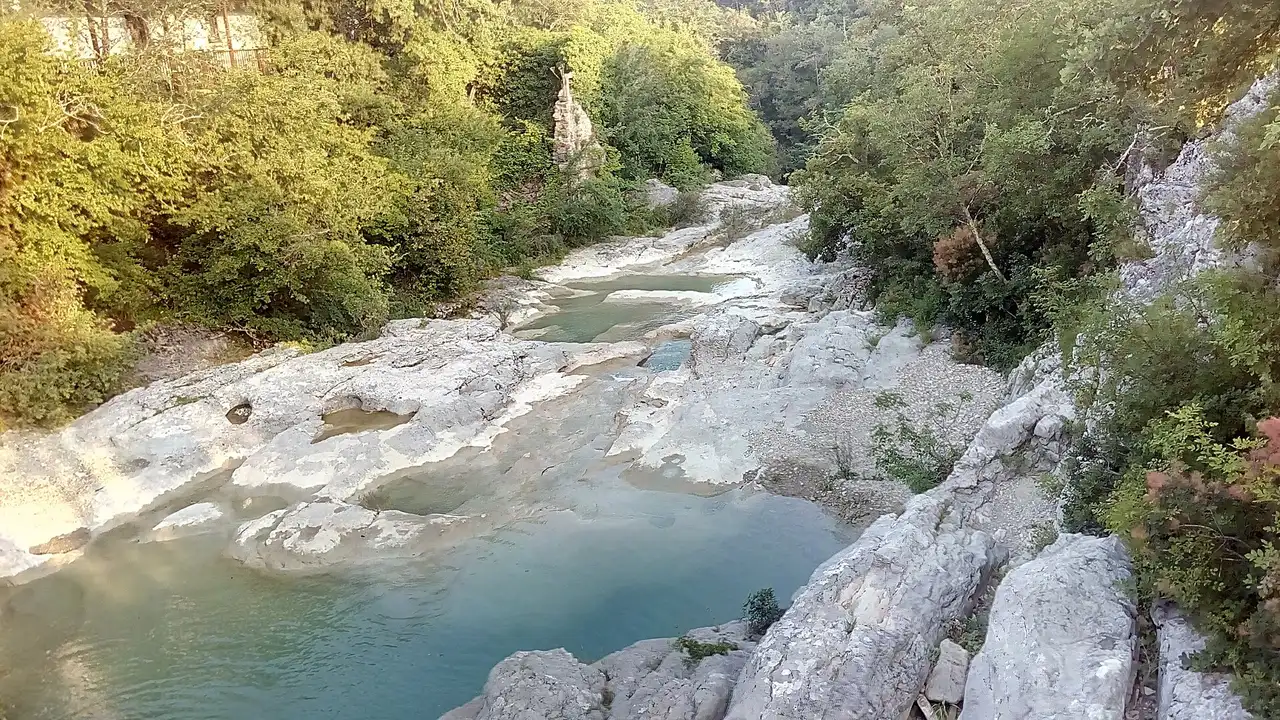
Type kotli croatia into a map search and the pin drops on a limestone shelf above the young Mirna, where a partly abandoned village of stone houses watches the river carve its name into the rock: kotli are the cauldrons — the pot-shaped hollows the cascades have drilled into the riverbed — and the village took its name from them. Once the leading economic settlement of the Hum area, known for its millers and tailors, Kotli keeps one preserved watermill, low stone bridges over the flowing channels and a set of warm shallow pools that make it the best swim stop in inland Istria. Access is free and unmanaged; the village is a protected rural complex on the Glagolitic lane, and the Mirna begins its run to the Adriatic a short walk upstream. This page covers the pools, the mill, the access and the honest pairing with Hum. The regional frame sits on the Istria waterfalls page, and the country-wide directory starts on the Croatia Waterfalls homepage.
Quick answer Free access, the cauldron pools, the old mill and the Hum pairing in one read
Checked on 13 September 2026: Kotli is free — an unmanaged village site above the Mirna headwaters near Hum, with no ticket and no gate. The cascades have drilled cauldron-shaped pools into the riverbed (the village's namesake); the water runs warm and shallow in summer, swimmable along the mill race. One old watermill survives, the village is a protected rural complex of roughly fifteen stone houses standing since at least the eighteenth century, and the tavern by the pool closes after the season. Pair it with Hum, the self-declared smallest town in the world, twenty minutes on foot or five by road.
Key takeaways
- Free, open access — a protected village complex, not a ticketed attraction.
- The pools are the draw: warm, shallow, cauldron-shaped hollows drilled by the cascades.
- One preserved watermill and low stone bridges over the channels.
- Roughly fifteen stone houses survive from the eighteenth century or earlier.
- Best paired with Hum and Roč on the Glagolitic lane.
Key facts
Opening hours
| Open-air village — all year | Daylight–Daylight |
|---|
Closed None — the village and the river are open access; the tavern (Konoba Kotlić) by the pool closes at the end of the season and in winter
Admission
- Adult
- Free — no ticket, gate or concession exists (checked 2026-09-13)
- Reduced
- Not applicable; meals at the tavern are priced on its own menu in season
- Free
- The pools, the cascades, the mill exterior and the village lanes
Planning it
- Time needed
- 1-1.5 h including a swim; half a day paired with Hum and Roč
- Address
- Kotli, near Hum, Istria County, Croatia
Kotli Tickets: Free Village, Seasonal Tavern and the Regional Tour
Nothing is ticketed here, checked 13 September 2026; the table covers the village reference site, the nearest bookable regional tour and the two planning traps.
The only decisions are seasonal and practical:
| Option | Window | Price | What it covers | Where it books | Book |
|---|---|---|---|---|---|
| The village's local reference siteAnyone planning the visit | Open-air site, daylight hours | Free | Village history, the preserved mill, access and contacts | Reference site | Official site |
| Guided Inner Istria tour with food tastingCar-free visitors wanting inner Istria with a guide | Scheduled departures | From ~$107 on the card | Motovun, Grožnjan and Pazin — the nearest bookable product, though it does not stop in Kotli | Tour card | Check Availability |
| The Kotlić tavern out of seasonAnyone planning a meal at the pools in winter | Closes at the end of the season | A locked door and a cold swim | The pool stays swimmable; the kitchen does not — plan food in Hum or Buzet | Skip the winter lunch | Check Availability |
| Driving into the lanesDrivers expecting a car park at the water | The village core is pedestrian | Blocked lanes and annoyed residents | Park at the village edge and walk down; the whole site takes minutes on foot | Skip the drive-in | Check Availability |
What Kotli Is — Millers, Tailors and Cauldrons
The name describes the geology, the architecture describes the money the river once earned.
Kotli takes its name from kotao — the cauldron — for the pot-shaped hollows the river has drilled into the limestone bed where the cascades land. The Mirna here is young, running clear over shelves and steps, and every pool between the cascades is a piece of the same slow engineering. The village above the water was once the leading economic settlement of the Humština, the territory of nearby Hum: its millers ground the grain and its tailors cut the cloth, and their stable incomes built the larger, finer stone houses that still stand — roughly fifteen of them, preserved since at least the eighteenth century.
The village is formally protected as a rural monument complex and sits on the Glagolitic lane, the marked heritage route that threads central Istria's oldest inscriptions. It is also partly abandoned: several houses stand roofed but empty, the mill keeps its machinery, and the tavern by the pool opens for the season and closes after it. The result is a site that photographs as a museum and works as a swim hole — rare company for a free attraction.
The name origin, the miller-and-tailor economy, the house count and the protected-complex status follow the village's local reference site, checked 13 September 2026.
The Pools, the Mill and the Bridges
The whole site is a single riverside circuit; the order below is the natural walking order.
Start at the village edge and walk down to the water: the first cascade empties into a natural pool the locals call Slap, broad enough to swim and shallow enough at its rim for children under watch. Below it the river steps down through the cauldron section, each hollow holding its own green basin, with low stone bridges crossing the channels between the mill and the houses. The preserved watermill stands at the heart of the row — machinery intact, wheel housing over the race — and its terrace is the site's best photograph.
Swimming here is lawful and long-established: the water runs warm and shallow in summer, and the pools renew themselves with every rain. Enter on the gravel margins, keep off the delicate moss edges of the cascades, and mind the slick stone around the mill race. Spring raises the flow and the noise; by August the pools warm to bath temperature and the cascades thin but keep moving — the Mirna's headwater springs rarely run dry entirely.
- Natural pool 'Slap' at the first cascade — the swim spot.
- Cauldron section: drilled hollows, each its own basin.
- Low stone bridges between the mill row and the houses.
- The preserved mill with intact machinery at the row's centre.
Istria's Water Villages Compared: Kotli, Rastoke and the Pazinčica
The table sets Kotli against the two nearest comparable water sites, using access and management facts verified on 13 September 2026.
| Site | Water and structures | Access and cost | Best for |
|---|---|---|---|
| Kotli (this page) | Cauldron pools on the Mirna headwaters; preserved mill, stone bridges | Free; informal parking at the village edge | Swimming and quiet photography |
| Rastoke at Slunj | Mill village over the Slunjčica's fan; ticketed central zone €5 | Free lanes; €5 mill-and-falls zone | Architecture and the Plitvice pairing |
| Zarečki krov on the Pazinčica | Walk-behind rock roof and one deep pool | Free; signed parking above the site | A single dramatic fall and a deep swim |
Pairing Kotli with Hum and the Glagolitic Lane
Kotli sits minutes from Hum, and the combination is the reason inner Istria rewards a whole day.
Hum, the walled hilltop town that markets itself as the world's smallest, lies about five minutes by road or twenty on foot from Kotli — its two lanes, the frescoed church and the rakija distillery make a tidy half-hour before or after the pools. The Glagolitic lane (Aleja glagoljaša) runs between Hum and Roč, marking the medieval script that this plateau preserved; Roč itself adds a defended town gate and a good lunch option when the Kotlić tavern is closed.
The driving logic works from either base: from the west coast (Rovinj, Poreč) count an hour to the Hum turn-off; from Buzet, twenty minutes south. Spring and autumn give the rivers their volume and the lanes their quiet; summer turns the pools into the day's destination and the villages into its cooling-off stops. Whatever the season, the circuit — Kotli, Hum, Roč — fits inside a half day with room for a long lunch.
- Hum: five minutes by road, twenty on foot — smallest-town marketing, real walls.
- Glagolitic lane: the marked heritage road between Hum and Roč.
- Roč: the lunch fallback when the Kotlić tavern is shut.
- From Buzet ~20 min; from the west coast ~1 h.
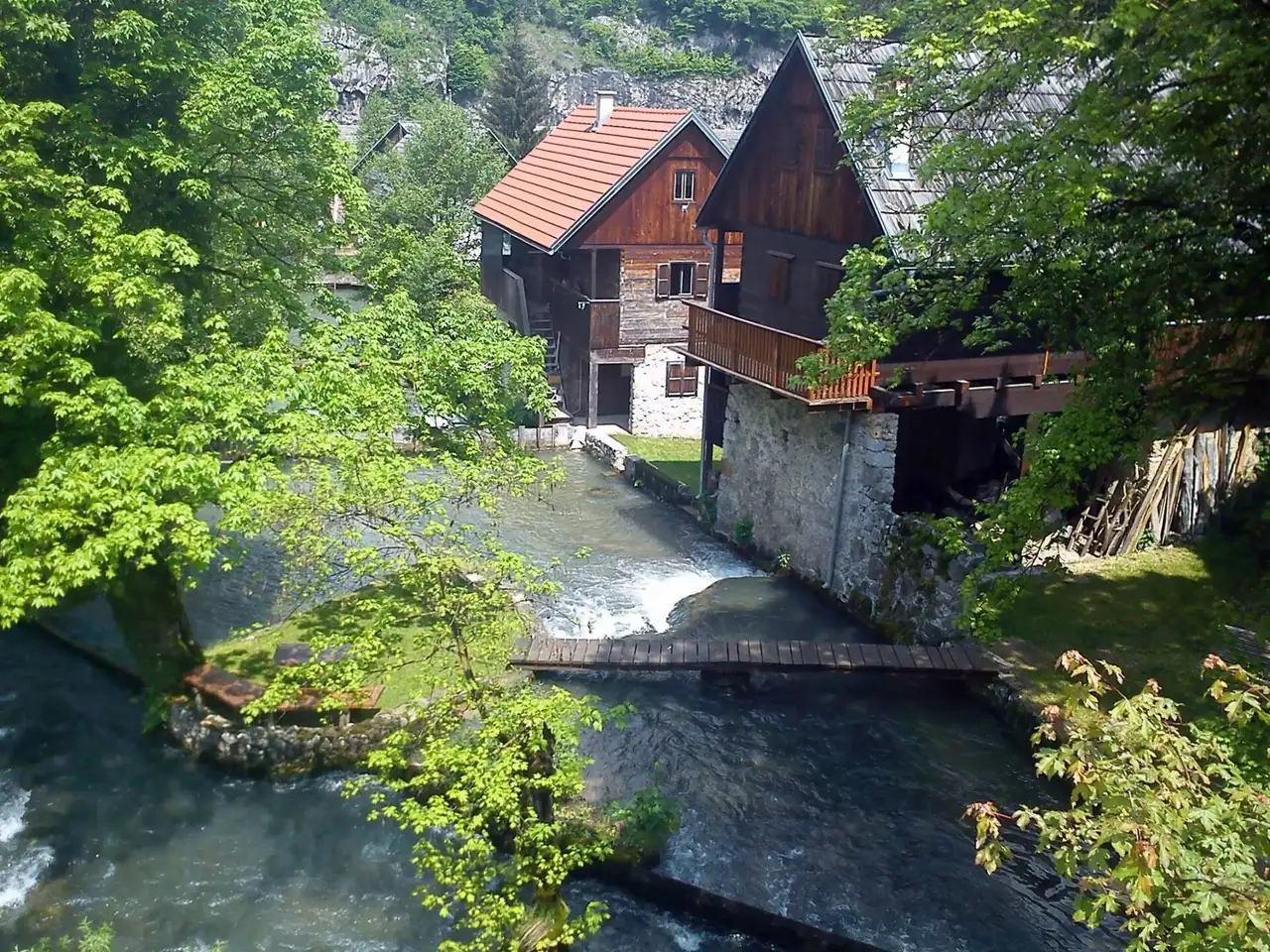
Mill architecture on karst water: the preserved mills of Rastoke, the closest developed analogue to the row Kotli keeps above the Mirna — one working survivor there against a dozen here.
Kotli Map: the Village, the Pools and the Hum Circuit
The village and its pools with the Hum-Roč pairing anchors on the Glagolitic lane.
Tours: the Honest Picture
No tour stops in Kotli — the lanes take no coaches and the village sells nothing to a group itinerary. The nearest bookable regional product is the guided Inner Istria tour through the hill towns and Pazin; use it for the region's frame and reach the pools by rental car or on foot from Hum.
 from $106.74
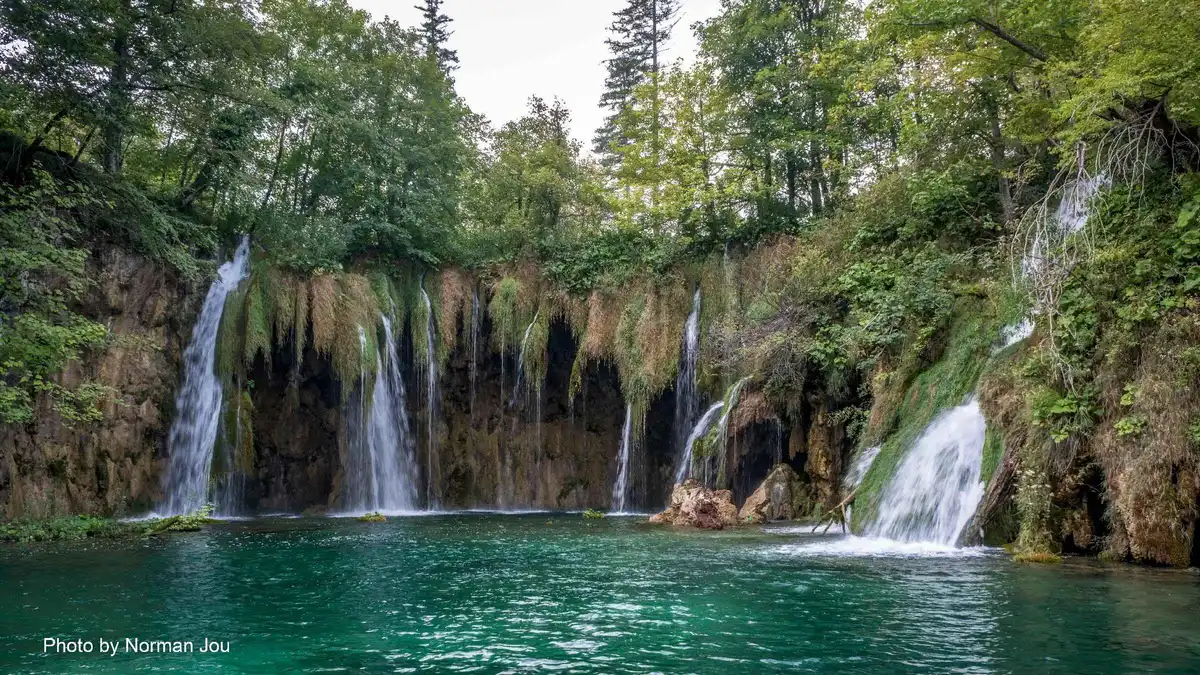
Istria: Guided Tour of Inner Istria with Food Tasting
Inner-Istria day tour through the hill towns with a Pazin stop and local food tasting.
Check AvailabilityPrices, ratings and details are the platform's own, checked in Q3 2026; dollar figures are the listed prices — the platform bills in your account's currency.
Kotli: Questions, Answered
Where exactly is Kotli?
In central Istria, above the headwater springs of the Mirna river, minutes from Hum and on the Glagolitic lane between Hum and Roč. The map above pins the village; the access road leaves the Hum-Roč local network.
Is it free to visit?
Yes — the village and the river are open access with no ticket or gate (checked 13 September 2026). It is a protected rural monument complex rather than a managed attraction, so facilities are limited to the seasonal tavern.
Can you swim in the pools?
Yes — bathing here is lawful and long-established. The water runs warm and shallow in summer; enter on the gravel margins, keep off the moss edges of the cascades and mind slick stone around the mill race.
How far is it from Hum?
About five minutes by road or twenty on foot. The pairing is the point: Hum's walls and Roč's gate plus the Glagolitic lane make the pools the centre of a half-day circuit.
Is the old mill open to visitors?
The mill's machinery is preserved and its exterior is the site's centrepiece; interior access depends on the private arrangement of the season — the tavern and the mill terrace operate commercially when open. Do not plan a visit around an interior tour.
How much time should the visit take?
An hour to an hour and a half covers the pools, the mill row and a swim; half a day with Hum and Roč. Spring rewards walkers with fuller cascades; summer rewards swimmers with warm pools.
Where to Go From Kotli
The pages this one leans on — the region, the comparable sites and the swim directory:
Istria waterfalls
The peninsula's full waterfall frame, seasons and map.
Sopot waterfall
The tall seasonal fall in the Buzet hills, north of the Mirna headwaters.
Zarečki krov
The walk-behind roof on the Pazinčica with its deep pool.
Croatia waterfalls you can swim in
The lawful-swim directory — these pools are a headline entry.
Best waterfalls in Croatia
Where the small sites rank when the headliners are done.
Reviewed Q3 2026 (July–September 2026); next review Q4 2026. Prices, hours and terms are set by the venue or operator and confirmed at checkout.
We may earn a commission if you book through one of our links, at no extra cost to you. Full affiliate disclosure