 Croatia Waterfalls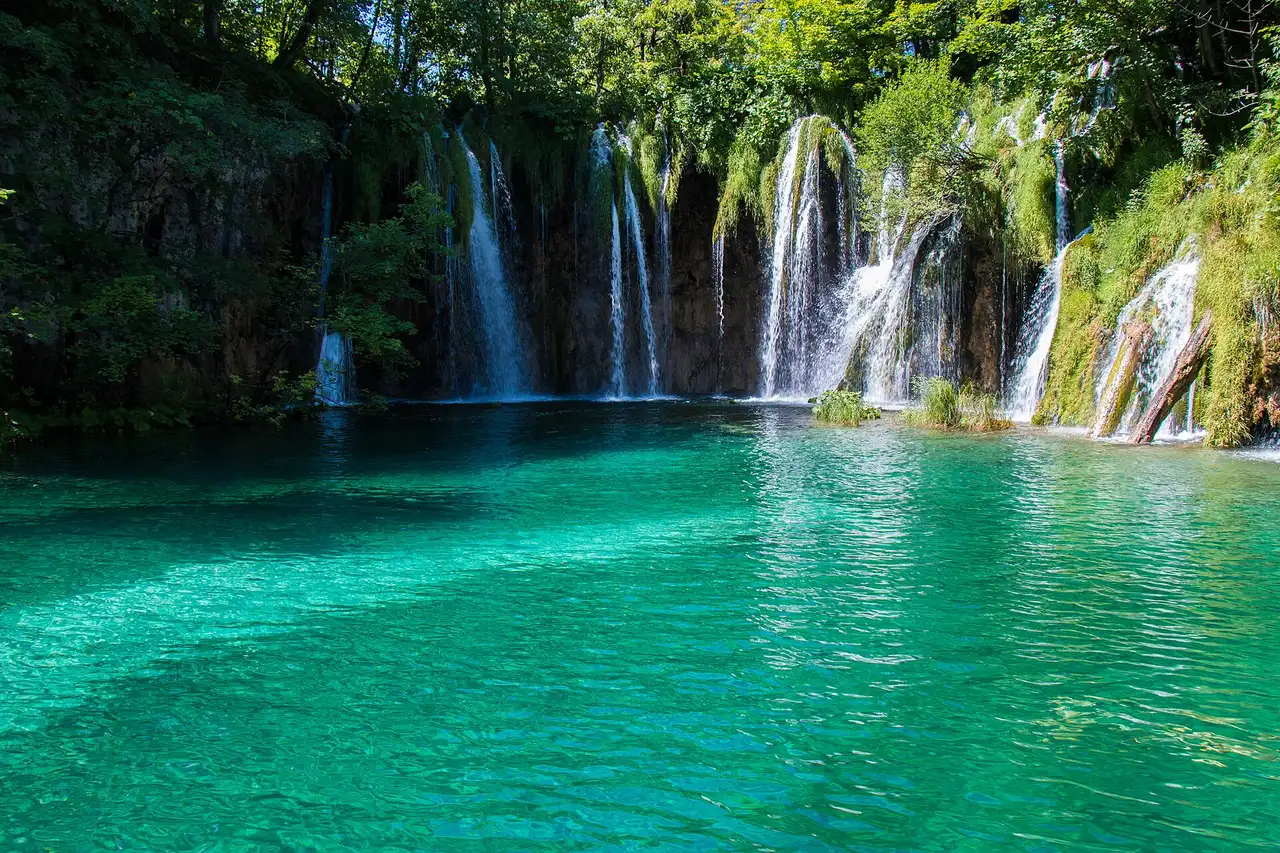
The plitvice waterfalls are not one cascade but a staircase: sixteen lakes stepping down 133 metres of karst, stitched together by tufa barriers the park measures as growing up to 13 millimetres a year. Croatia's oldest national park (designated in 1949) and a UNESCO natural World Heritage Site since 1979, it now funnels roughly 1.5 million visitors a year through two entrances, a fleet of electric boats and a set of lettered route programmes that decide what you see and how long you walk. The headliner is the 78 m Veliki Slap, the country's tallest waterfall, where the Plitvica stream leaves the last lake and drops into the Korana valley. This page is the master plan: how the ticket bands and dated entry work, which route programme fits how many hours, where the boats and trains actually run, which rules get enforced, and how the crowds move hour by hour. Booking mechanics sit on the Plitvice tickets page and the honest park-versus-park decision on plitvice or krka. Every route, band and rule below was checked on 13 September 2026 against the official park pages; the country-wide directory starts on the Croatia Waterfalls homepage.
Quick answer Ticket bands, the dated-entry rule, route logic and the swimming ban in one read
Checked on 13 September 2026: a one-day ticket costs €10 in winter, €23 in the shoulder bands (1 April-31 May and October) and €40 on peak summer days, with a €25 late-day band after 16:00 (15:00 in September); the price includes the electric boats and the panorama trains, and summer entry is sold as dated tickets because the park caps visits at 12,000 a day. Route programmes run 2-3 hours (A from Entrance 1) to 6-8 hours (K routes on foot). Swimming is banned in the entire park zone and drones are banned outright. Full booking mechanics on the Plitvice tickets page; the 78 m Great Fall has its own page.
Key takeaways
- Book the dated ticket first: summer days sell out and the cap is enforced at the gates, not politely suggested.
- The boat and the trains are included — no supplement, no separate queue ticket; they ride on the park entry.
- Four hours is the realistic minimum for the classic half (Programme B or H); a full day suits the K routes.
- No swimming, no drones, no leaving the boardwalks — rangers enforce all three and fines follow the park rulebook.
- Arrive before 09:00 or take the after-16:00 (15:00 in September) cheaper band to halve the crowd.
Key facts
Opening hours
| Published schedule, all entrances | 07:00–19:00 |
|---|---|
| Parking lots (Entrances 1 and 2) | 07:00–20:00 |
Closed Open 365 days a year; hours shift with the seasonal calendar and ticket desks stop selling in the late afternoon of the current schedule
Admission
- Adult
- One-day bands €10 (1 Nov-31 Mar) / €23 (1 Apr-31 May and October) / €40 peak day 1 Jun-30 Sep, with a €25 late-day band after 16:00 (15:00 in September) — official 2026 price list, checked 2026-09-13
- Reduced
- Students €6 / €14 / €25 peak (€15 late-day); children 7-18 €4 / €6 / €15 peak (€9 late-day); two-day tickets €15 / €39 / €60
- Free
- Children under 7; visitors with a 50%+ disability and one accompanying person
Planning it
Plitvice Tickets: The 2026 Bands and How to Book Them
The bands below come straight from the official 2026 price list and the official dated store, checked 13 September 2026; the tour figures print live from the booking platform. The summer bands are the scarce item — the park caps daily entries and sells dated slots, so the booking channel matters as much as the price.
One question splits the buyers: do you hold a dated ticket for the hour you plan to walk in, or are you gambling on the cheaper late-day band and a long afternoon?
| Option | Season / window | Adult price | What it covers | Where it books | Book |
|---|---|---|---|---|---|
| Dated one-day ticket, official storeIndependent travelers with a fixed date | 1 June - 30 September peak band | €40 all-day / €25 late-day (after 16:00; 15:00 in September) | Entry, electric boats, panorama trains, insurance | Official dated store | Official site |
| Shoulder and winter one-day bandsAnyone pricing a non-peak date | 1 April - 31 May and October; 1 November - 31 March | €23 shoulder / €10 winter | Same inclusions: entry, boats, trains, marked trails | Official price list | Official site |
| Guided day trip from Split with entry ticketsCoast-based visitors without a car | Daily departures through the season | From ~$103 on the card | Transport, dated park ticket, guide | Tour card | Check Availability |
| Self-guided day trip from Split with boat rideBudget travelers who want the logistics handled | Fixed daily departures | From ~$58 on the card | Transport, entry, the Kozjak boat ride | Tour card | Check Availability |
| The August midday walk-up gambleNobody — this is the mistake to avoid | July - August, roughly 11:00 - 15:00 | €40 and possibly sold out | No dated ticket, 600-per-hour entrance caps, peak queues | Skip it — book dated entry | Check Availability |
What the Park Is Made Of: Lakes, Barriers and Anchors
Nine fixed points organise any visit, grouped into the water itself and the logistics anchors that route you through it. Cards carry the access price context, the time a real visit takes, a booking tier (2 = dated ticket, 1 = wise to plan, 0 = walk in) and GPS coordinates. Checked on 13 September 2026.
The lakes and barriers
-
Veliki Slap, the Great Waterfall
Waterfall / 78 m single drop Included in the park ticket45-60 min with the lower-lakes viewpointbook-ahead tier 2 of 3
The Plitvica stream leaves the last of the sixteen lakes and drops 78 m in one ribbon — Croatia's tallest waterfall and the emotional exit of every lower-lakes route. Covered in full on the Veliki Slap page.
-
The Kozjak electric-boat crossing
Boat transfer / included in ticket Included in the park ticket10-20 min per crossingbook-ahead tier 2 of 3
Silent electric boats cross the largest lake on a short P1-P2 shuttle running from 07:00 and a longer P2-P3 route from 08:00, every half hour in the current schedule. The dated ticket that gets you aboard is covered on the Plitvice tickets page.
-
The lower-lakes canyon circuit
Route / boardwalk circuit Included in the park ticket2-3 h (Programme A) or part of longer routesbook-ahead tier 2 of 3
Boardwalks thread the canyon of Milanovac, Gavanovac, Kaluđerovac and Novakovića brod to the Great Waterfall — the steepest, narrowest, most photographed half of the park, and the half every short visit should include. The route choices are decoded below on this page.
-
The upper-lakes cascades
Lake terraces / tufa stairway Included in the park ticket2-3 h on their ownbook-ahead tier 2 of 3
Thirteen pools stacked end to end, linked by low white barriers and crossed at the fords where the water spreads widest. Most of the system's 133 m total descent accrues across these terraces; the trains shortcut the return leg.
-
Rastoke, the satellite mill village
Village / watermills (outside the park) Token village entry fee1-1.5 h
Where the Slunjčica meets the Korana, a hamlet of wooden mills rides its own mini-Plitvice of tufa shelves — the natural pairing for a Zagreb-side approach. Details and access on the Rastoke page.
Logistics anchors
-
Entrance 1 (Rastovača), the north gate
Gate / ticket desk Ticket desks stop selling in the late afternoonArrival buffer 30-45 minbook-ahead tier 2 of 3
The gate for the Great Waterfall first: green-marked routes start here and the canyon lies minutes from the turnstiles. Ticketing mechanics, parking and the dated-entry scan are covered on the Plitvice tickets page.
-
Entrance 2 (Hladovina), the south gate
Gate / train station Ticket desks stop selling in the late afternoonArrival buffer 30-45 minbook-ahead tier 2 of 3
Orange-marked routes start here at the panorama-train station, and the south side is where the beds cluster — Hotel Jezero sits inside the park and the village guesthouses line the approach road. The bed inventory is priced on the where-to-stay page.
-
The boat docks (P1-P3)
Boat piers Included in the park ticketBoats every 30 min in the current schedule
Three piers carry the whole crossing system: the short shuttle between P1 and P2, and the long route linking P2 and P3 across the open lake. Queues peak with the midday wave; the docks empty out in the first and last hours.
-
The ticket desks and dated entry
Ticketing Seasonal bands €10-40Scan-in under a minute with a digital ticketbook-ahead tier 2 of 3
Summer entry is sold per date; the store releases slots and the gates count 600 people per entrance per hour against a 12,000 daily cap. How the bands, slots and two-day tickets work is laid out on the Plitvice tickets page.
Numbers match the list — tap a pin for the guide.
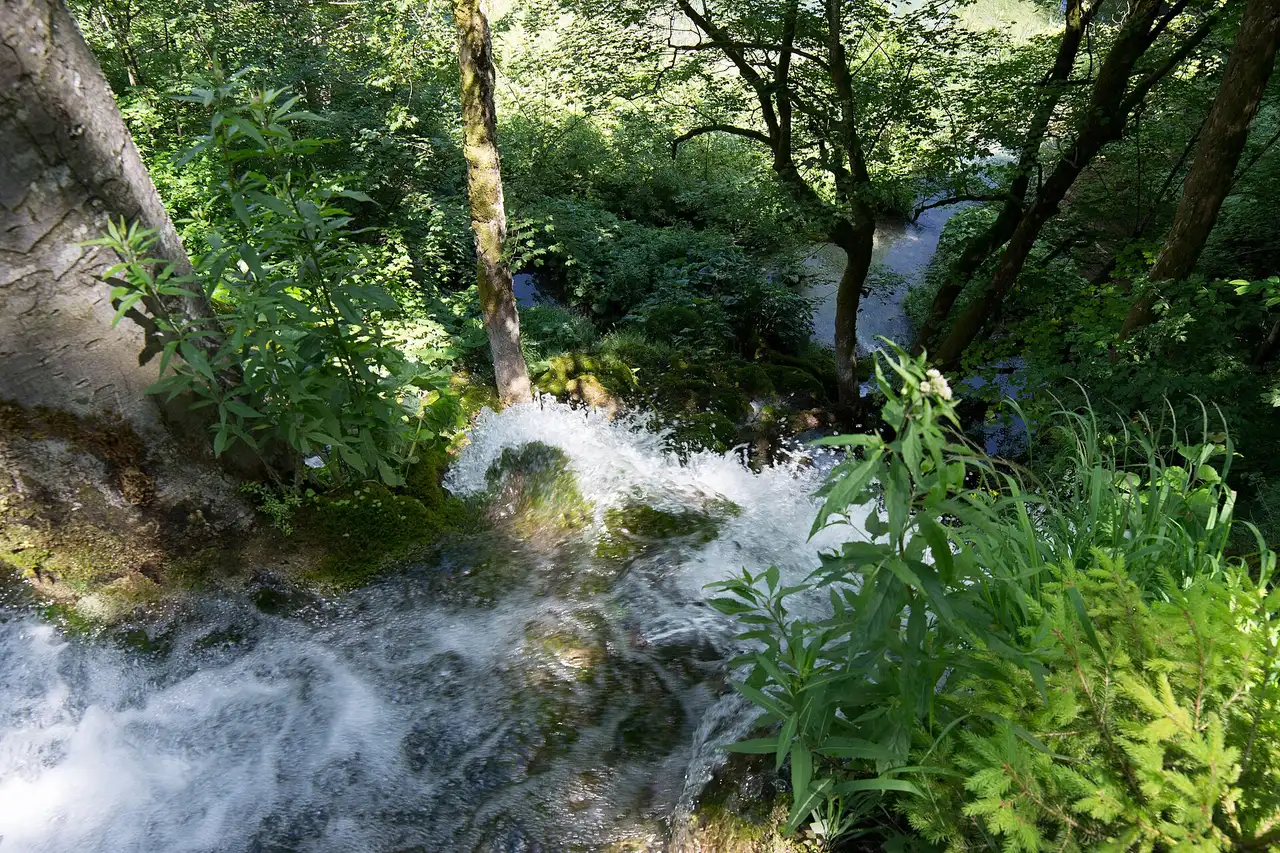
The upper lakes stack thirteen pools behind low tufa barriers that grow a few millimetres a year — the reason the boardwalks forbid stepping off the marked line.
Plitvice Routes Compared
Durations, trail lengths and start gates are the park's own published figures for the lettered route programmes, checked on 13 September 2026 on the lake-tour programmes page. Every programme includes the boat and train rides its row names; all rides ride on the entry ticket.
| Route / side | Start | Time | What you see | Who it suits |
|---|---|---|---|---|
| Programme A (green) | Entrance 1 | 2-3 h / 3.5 km | The lower-lakes canyon and the Great Waterfall — no boat or train, pure boardwalk | Short visits; the 3-hour stop on a Zagreb-Split drive |
| Programme B (green) | Entrance 1 | 3-4 h / 4 km | The canyon plus the electric-boat crossing of Kozjak and a panorama-train leg back | The classic half-day; first visit on a tight clock |
| Programme H (orange) | Entrance 2 | 4-6 h / 8.9 km | Train out, the upper-lakes terraces on foot, boat across Kozjak, a second train home | The full picture in one visit; photographers |
| Programme K1 (green) | Entrance 1 | 6-8 h / 16.5 km | The whole system mostly on foot, with the short boat hop and the Tomićevo Pogledalo viewpoint | Strong walkers; anyone with a full day |
| Programme K2 (orange) | Entrance 2 | 6-8 h / 17.5 km | The same perimeter in reverse, ending back at Entrance 2 | South-side sleepers who want the day to start on the train |
The Route Programmes Decoded
The park sells its trail network through lettered programmes, colour-coded by gate: green panels list the Entrance 1 routes, orange panels the Entrance 2 ones.
Reading the programme board is the single most useful skill at Plitvice, because the lettered routes are not marketing labels — they are the wayfinding system. Each letter fixes a start gate, a walking time, a trail length and a set of included boat and train legs, and the colour of the panel tells you which entrance it starts from. Two programmes were listed as temporarily suspended in the current schedule, so confirm the board on arrival; the rest run daily with the season's hours.
The logic underneath is simple. The park is a figure-of-eight around Lake Kozjak: the lower-lakes canyon hangs below Entrance 1, the upper-lakes terraces spread above Entrance 2, and the boat plus the two train lines stitch the halves together. Every route is a combination of those parts, so once you know which half you care about, the letter picks itself.
From Entrance 1: Programmes A, B and C
Programme A is the park compressed: 3.5 km and 2-3 hours through the lower-lakes canyon to the Great Waterfall and back, with no boat or train — the only lettered route that stays entirely on foot in one half of the park. Programme B adds the electric-boat crossing of Kozjak and a panorama-train return, which turns 4 km into a 3-4 hour loop that samples both halves. Programme C is the full eight-kilometre circuit, 4-5 hours, walking both the canyon and the upper terraces with boat legs between and mostly returning by train.
- A — 2-3 h, 3.5 km: canyon and Great Waterfall only; start and finish at Entrance 1.
- B — 3-4 h, 4 km: canyon, boat across Kozjak, train back; the classic first visit.
- C — 4-5 h, 8 km: both lake halves on foot with boat legs; return mostly by panorama train.
From Entrance 2: Programmes E and H
Programme E mirrors A from the south: 5.1 km and 2-3 hours with a short boat ride across Kozjak and a sightseeing-train return to the start. Programme H is the south side's serious offering — 8.9 km and 4-6 hours that ride the train out, walk the upper-lakes terraces in the quiet direction, cross Kozjak by boat and take a second train back. Direction matters more than it sounds: walking the upper lakes from the south end puts the crowds behind you and drops the water downstream the whole way.
The K routes: the whole shoreline on foot
K1 from Entrance 1 and K2 from Entrance 2 are the perimeter routes — 16.5 and 17.5 km of mostly walking, 6-8 hours, with only the short electric-boat hop across Kozjak's east arm where the trails demand it. K1 adds the Tomićevo Pogledalo viewpoint, the one high balcony that shows the lake system as a single staircase. These are the routes that justify the two-day ticket if you also want a second, unhurried pass; for everyone else, B or H is the honest best-of.
- K1 — 6-8 h, 16.5 km from Entrance 1, viewpoint included.
- K2 — 6-8 h, 17.5 km from Entrance 2, same loop in reverse.
- Two-day tickets (€60 peak) exist precisely for this pace.
Programme names, durations, trail lengths and the boat/train inclusions are from the park's lake-tour programmes and hours-of-operation pages, checked 13 September 2026.
A Day at Plitvice Hour by Hour
Crowds at Plitvice move like weather, and the forecast is stable enough to plan around.
The park's own capacity figures explain the rhythm: a 12,000-person daily cap in summer, counted 600 per entrance per hour, which means the day fills from both gates in a predictable wave. Tour coaches arrive from Zagreb and the coast between 10:00 and 11:30 and the boardwalks narrow at exactly the places you would guess — the canyon between the viewpoints and the boat docks. The hour-by-hour below is built for the peak season; in the shoulder months the wave flattens by half and the quiet windows stretch.
The second clock is the ticket's. The late-day band (after 16:00 in June-August, after 15:00 in September) prices a summer visit at €25 instead of €40, and the park runs until the published closing hour — a self-selected quieter crowd riding the last boats and trains. It is the single best value at Plitvice for anyone who does not need a full day.
07:00 - 09:30: the two quiet hours
First entry is the golden ticket. The gates open at 07:00 in the current schedule, the first boats run from 07:00 and the trains from around 07:30, and until roughly 09:30 the boardwalks belong to early risers and tour groups still on the road. This is when the lower-lakes canyon is walkable at reading pace and the mist still hangs over the Great Waterfall.
Start at whichever entrance sits closer to your bed; both have parking on site from 07:00.
09:30 - 15:00: the wave and how to ride it
The coaches land, the ticket scan queues lengthen, and the canyon becomes a moving queue. The counter-intuitive move is to be at the furthest point from the entrances in these hours: the upper-lakes terraces thin out dramatically past Galovac, and the Kozjak boat docks fluctuate with the crossing schedule rather than the coach arrivals. Save the narrow canyon stretches for the bookends of the day if you can.
The table below is the shape of the wave in July and August.
| Hour band | What happens | The move |
|---|---|---|
| 07:00 - 09:30 | Gates open; canyon quiet, mist on the Great Waterfall | Walk Programme A or B first |
| 09:30 - 11:30 | Coaches arrive; scan queues at both entrances | Be past the turnstiles; head for the upper terraces |
| 11:30 - 15:00 | Peak: boardwalk queues in the canyon, boat lines at P1-P2 | Stay in the wide upper-lakes stretches or break for lunch |
| 15:00 - 17:00 | The wave ebbs; late-day ticket holders begin to arrive | Return through the canyon south-to-north |
| 17:00 - close | Boats and trains on their last runs; light turns gold | The photograph hour at the lower lakes |
15:00 onwards: the late-day ticket and the golden hour
From mid-afternoon the calculus flips. The €25 late-day band applies after 16:00 in June-August and after 15:00 in September, the coaches are gone or leaving, and the light moves over the canyon rim — which, in practice, means the Great Waterfall's viewing platform photographs best in the last two hours. Ticket desks stop selling in the late afternoon of the current schedule, so a late-day plan needs the online store, not the window.
Photographers working the falls should read the light notes together with the season guide: the canyon faces mean the fall is side-lit for most of the day and front-lit only near closing.
- The late-day band is €25 against €40 in the peak weeks — a 37% discount for arriving after the wave.
- Last boats and trains run to the published closing time; check the seasonal calendar for the exact hour of your date.
- Tripods are not policed as a separate rule, but blocking the boardwalk is — the platforms pinch at the viewpoints.
Parking, buses and the road in
Both entrances have their own parking lots, open 07:00-20:00 in the current schedule, and both fill with the coaches. Entrance 1 sits just off the D1 and is the natural gate from Zagreb or Rastoke to the north; Entrance 2 serves the south side and the coast road approach. Long-distance buses on the Zagreb-Split corridor stop at both entrances, which makes a one-day visit the single most car-free-friendly waterfall trip in the country — the transport comparison prices the bus against the day tours.
- Arriving from Zagreb (about 1 h 45 by road): Entrance 1, with Rastoke as the stop on the way.
- Arriving from the coast: Entrance 2 keeps you off the D1's worst bends at the end of the day.
- Buses drop at the entrance zones; the walk to the turnstiles is minutes, not kilometres.
- The day trips from Zagreb page strings the corridor together without a car.
Where food and beds actually sit
Inside the park, the restaurant options cluster at Entrance 2 and the mid-point by the lake — serviceable, priced like a captive audience, and swamped 12:00-14:00. The better eating sits outside: the village of Plitvička Jezera along the south approach, Rakovica to the north, and the Rastoke mills corridor at Slunj. Beds follow the same map, and the where-to-stay page prices the full set — from Hotel Jezero inside the park to guesthouses in walking distance of each gate.
Staying within 15 minutes of a gate is the difference between a 07:15 and a 09:30 first scan, which is the difference between the quiet hours and the wave.
- Book beds before the park ticket in July-August — village stock is thinner than the park's slots.
- Pack a picnic: benches exist near the boat docks and eating your own food is not policed.
- Carry some cash — card terminals are standard but the smaller konobas off-park still prefer it at rush hour.
Seasons and the winter freeze
The park runs 365 days, but it runs three different parks. Spring (April-May, €23 band) brings maximum flow and bare trees; summer brings the peak band, the full boat and train timetable and the crowd wave; autumn (October, €23) brings colour and thinning crowds. Winter is the surprise: the €10 band, a shortened boardwalk network where ice closes the lake-edge sections, boats and trains on reduced runs, and a landscape of frozen barriers that photographs like nothing else in the country.
Most hospitality facilities close in the colder months and lodging inside the park shrinks to Hotel Jezero, so a winter visit needs a real bed plan — the month-by-month guide grades every month, and the winter-specific mechanics sit in the winter guide.
- April-June: full flow, shoulder price, pre-wave mornings — the consensus best window.
- July-August: peak band, dated entry essential, wave 10:00-15:00.
- September: the after-15:00 band arrives early — the late-day trick works from mid-afternoon.
- Winter: ice reroutes the boardwalks; check the park's current-conditions page the morning of your visit.
Capacity figures from the park's published visitor-cap rules; ticket bands and late-day windows from the official 2026 price list; hours and parking from the hours-of-operation page. All checked 13 September 2026.
Rules That Are Actually Enforced
Croatian national parks publish long rulebooks; Plitvice enforces a short list of them, visibly and with fines.
The park's rules of conduct come from the Rulebook on the Protection and Preservation of the Plitvice Lakes National Park, and the enforcement reality is straightforward: rangers patrol the boardwalks, the drone ban is taken seriously, and the swimming prohibition is absolute. The reason is geological, not bureaucratic — the barriers are alive, growing up to 13 millimetres a year from mosses and algae precipitating carbonate, and a footprint, a splash or an anchor does damage that takes decades to regrow. The rules below are the ones with teeth; the rest of the rulebook (no litter, no picking plants, no disturbing animals, no open fire, no camping, no fishing) follows the standard national-park grammar.
Swimming and the water
The rulebook's wording is blunt — do not swim in the zone of the National Park — and it applies to every lake, every barrier pool and every cascade basin, in August as in February. Rangers work the boardwalks in the peak weeks and the prohibition is the single most-frequently enforced rule in the park. Anyone whose trip depends on a swim should redirect it: the legal swimming page lists the rivers where bathing under a cascade is lawful, starting with the Mrežnica an hour north.
Drones, dogs and bikes
Remotely controlled aircraft for filming from the air are banned outright — this is one of the clearest rules in the Croatian park system, and the park requests permits only for controlled commercial filming. Dogs must be leashed (they are not banned, but the boardwalks make an unleashed dog everyone's problem), and cycling is forbidden inside the park zone — the 36 km of hiking trails and 22 km of lake walks are pedestrian territory. Drones get confiscated; the safe assumption is that anything flown over the lakes will end a visit.
- Drones: banned for visitors; permits exist only for controlled filming.
- Dogs: allowed on a leash only.
- Bikes: forbidden on the trails; park at the gate.
- Dogs, bikes and drones aside, the day-to-day rule is the boardwalk line itself.
Staying on the boardwalks (and why it matters)
The marked footpaths are not a suggestion: walking outside them is expressly prohibited, and at the fords where the boardwalk crosses open water the reason is visible underfoot — the white tufa is a living deposit, saturated and fragile, growing its few millimetres a year. The same logic governs the photography protocol: commercial and media shooting needs a permit, while ordinary visitor photography does not. A visit that stays on the wood, keeps the drone in the bag and swims nowhere is a visit that never meets a fine.
- Stay on the marked boardwalks and trails — enforced, and the tufa is genuinely alive.
- No swimming anywhere in the park zone — rangers patrol it in every season.
- Drones stay home; dogs on a leash; bikes at the hotel.
- Fines follow the park rulebook — the cheapest rule set to obey in the country.
Rules quoted from the park's rules-of-conduct page (Rulebook on the Protection and Preservation of the Plitvice Lakes National Park), checked 13 September 2026.
Tours That Handle Plitvice For You
For travelers without a car, a tour converts the dated-entry problem and the drive into one booking; these three depart from Split and cover the guided, self-guided and budget versions of the day.
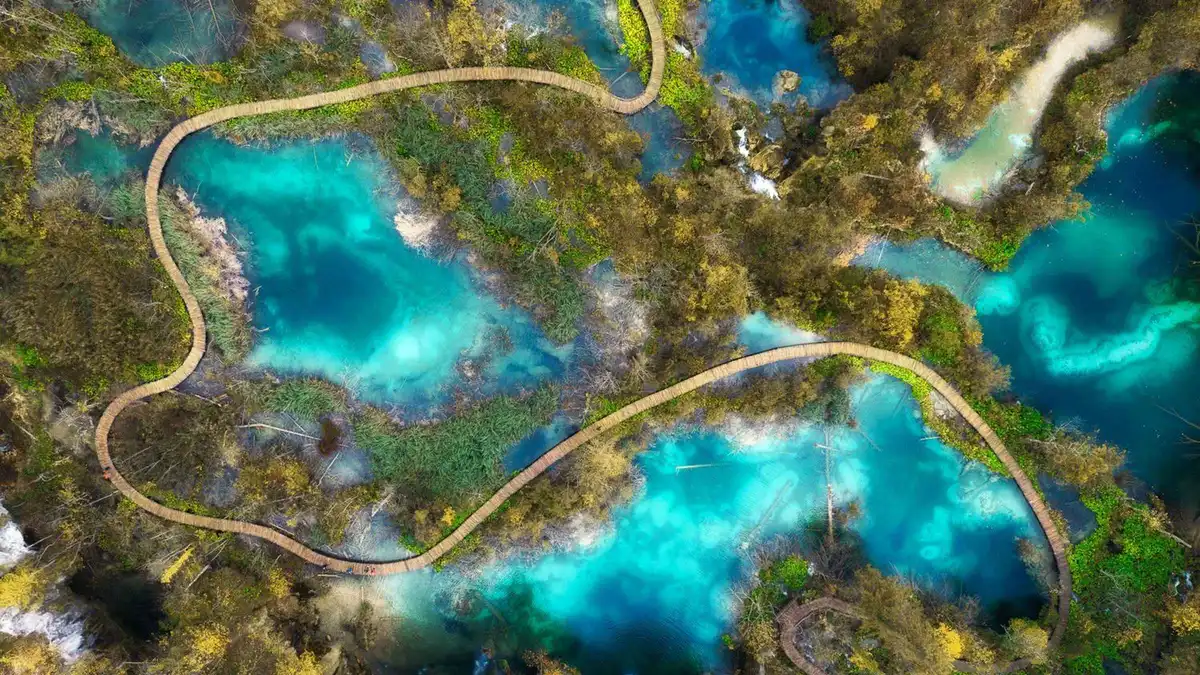 from $110.22
Zagreb: Plitvice & Rastoke Guided Trip with Ticket (ENG/ESP)
Semi-private day trip from Zagreb pairing the Plitvice lakes with the Rastoke mill village, ticket included.
Check Availability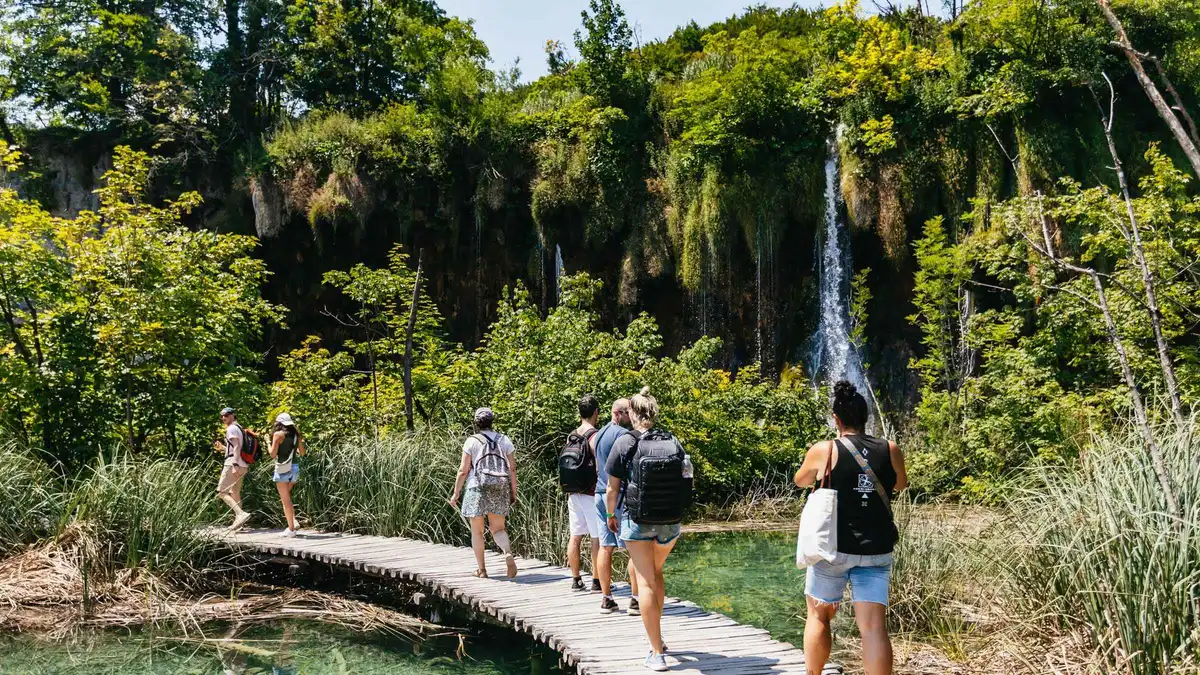 from $103.26
From Split: Plitvice Lakes Guided Tour with Entry Tickets
Plitvice day trip from Split with the dated entry ticket included — the booking-problem solver.
Check Availability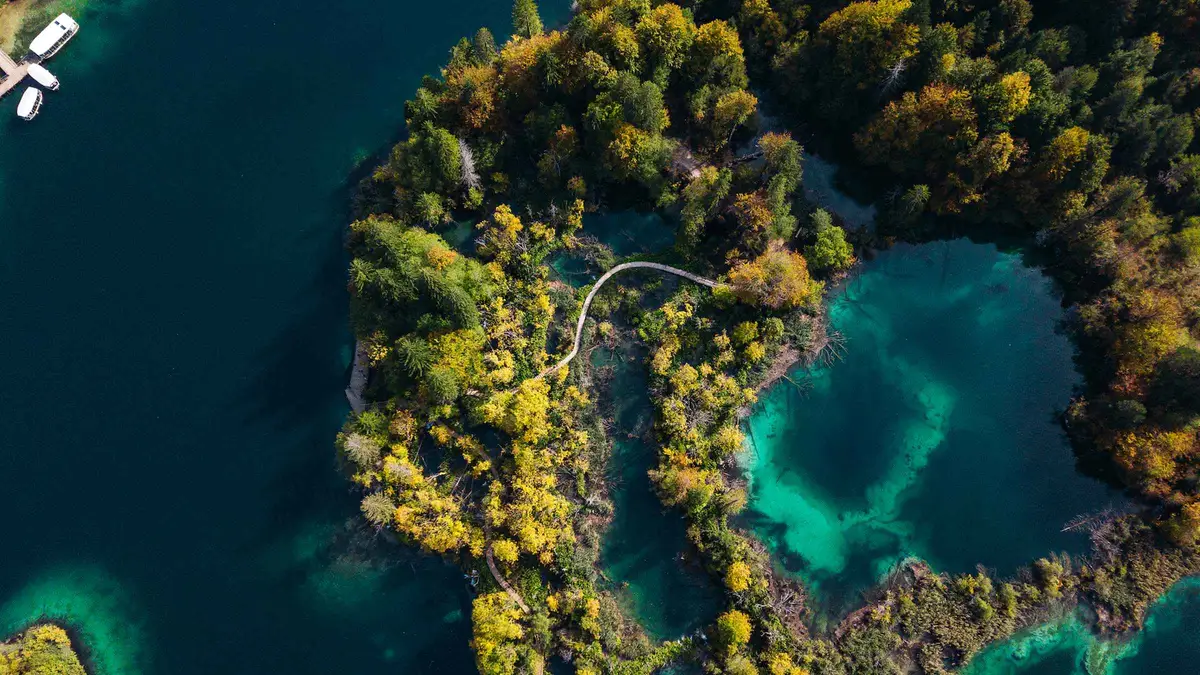 from $58.01
Split: Self-Guided Plitvice Lakes Day Tour with Boat Ride
Budget self-guided Plitvice day trip from Split with coach transport and the boat ride.
Check AvailabilityPrices, ratings and details are the platform's own, checked in Q3 2026; dollar figures are the listed prices — the platform bills in your account's currency.
The Ladder From the Upper Lakes to the Great Fall
Read top to bottom as the water flows: sixteen lakes and their barriers descend 133 m of karst between the first pool and the last, and the system's defining gesture is saved for the very bottom.
- Upper-lakes stairway (Prošćansko to Burgeti) many small steps Thirteen pools linked by low white barriers; most of the 133 m total descent accrues across these terraces.
- Lake Kozjak no barrier — one pool The system's largest lake (47 m deep) sits flat; the electric boats cross it every half hour.
- Milanovac - Kaluđerovac chain stepped tufa The lower-lakes stairway: short barriers stepping the water down the canyon in green pools.
- Sastavci cascade ≈30 m combined The final terrace where the Plitvica waters run together toward the Korana; the wide platform below the Great Waterfall.
- Veliki Slap, the Great Waterfall 78 m single drop Croatia's tallest waterfall — the Plitvica stream leaves the last lake and drops into the Korana valley.
Veliki Slap's 78 m is the park's official figure; the smaller steps are rounded estimates from the published 133 m total descent across the system.
Plitvice Questions, Answered
Can you swim in the lakes?
No. Swimming is banned across the entire national-park zone and rangers enforce it — the lakes are a protected tufa-building system, not a bathing lake. The lawful alternatives sit on the legal swimming page.
How many hours do you need?
Two to three hours covers Programme A (the canyon and the Great Waterfall); three to four covers Programme B with the boat; four to six covers Programme H from the south gate; a full day suits the K perimeter routes. The stay-length arithmetic for both parks together lives on the how-many-days page.
Which entrance is better?
Entrance 1 for the canyon and the Great Waterfall first — the boardwalks start minutes from the gate. Entrance 2 for the upper terraces, the train-first rhythm and the beds; it also suits a coast-side approach. The route table above maps every programme to its gate.
Do children pay?
Children under 7 enter free; ages 7-18 pay the child band (€4 winter / €6 shoulder / €15 on a peak summer day, with a €9 late-day option). The bands print on the official price list, and families should also read the kids grading page for stroller and pace reality.
Are drones allowed?
No. Remotely controlled aircraft for filming from the air are banned in the park; only controlled commercial filming with a permit is possible. Fines apply and confiscation is the norm — leave it at the hotel.
Is the boat ride really included in the ticket?
Yes — the official price list states the ticket includes transport with the electric boat and the panorama trains, along with insurance. There is no supplement and no separate boat ticket; the dated entry is all you scan.
What happens when it rains or the ice comes?
Rain swells the falls and closes nothing but the slippery fords; heavy multi-day rains can reroute sections. In winter, ice closes the lake-edge boardwalks first and the park publishes current conditions daily — check the park's alerts page the morning of a winter visit. The season mechanics are in the winter guide.
Is a day trip from the coast realistic?
From Split, yes — the guided and self-guided day trips run roughly two and a half hours each way, and the ticket-inclusive versions solve the dated-entry problem. From Zagreb it is easier still at about 1 h 45. The full comparison of both parks from each base sits on the plitvice or krka page.
Where to Go From Here
The pages this one leans on — the booking mechanics, the headliner fall, the satellite village and the routing decisions:
Veliki Slap
The 78 m Great Waterfall itself: viewpoints, light and the lower-lakes approach in detail.
Plitvice tickets
The dated-entry system, band-by-band prices and the booking channels, step by step.
Rastoke
The mill village at Slunj where the Slunjčica meets the Korana — the natural corridor stop.
Plitvice or Krka
The honest park-versus-park comparison by trip length, base and season.
Waterfalls near Zagreb
The Zagreb day-trip radius: the park, Rastoke and the Mrežnica swims.
The waterfalls road trip
Seven days chaining every region, with the park slotted into the week correctly.
Reviewed Q3 2026 (July–September 2026); next review Q4 2026. Prices, hours and terms are set by the venue or operator and confirmed at checkout.
We may earn a commission if you book through one of our links, at no extra cost to you. Full affiliate disclosure