 Croatia Waterfalls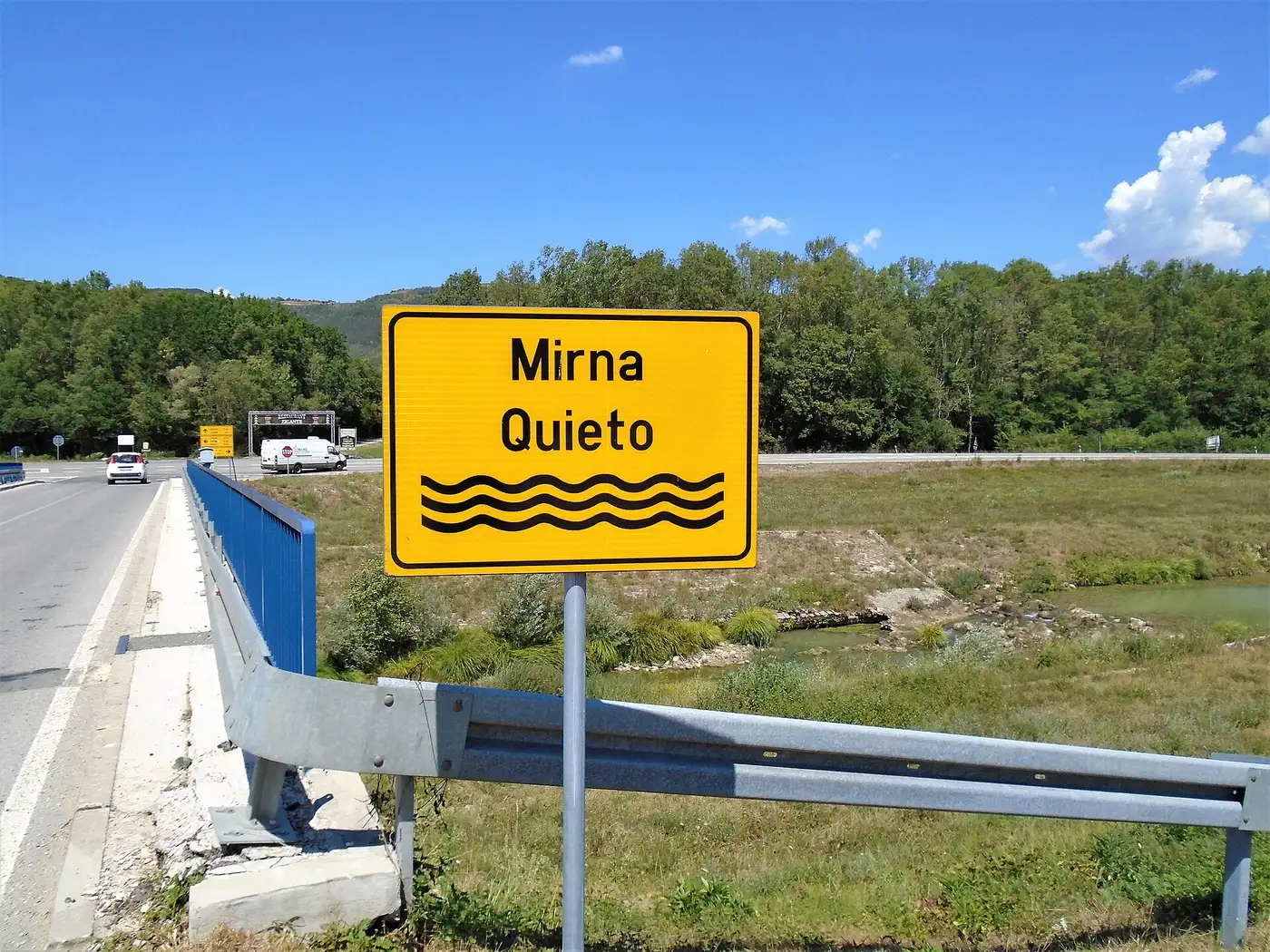
The istria waterfalls are a different species from the Dinaric giants: the peninsula's streams are short, rain-fed and karstic, which makes the four real stops — the 30-metre Sopot fall near Buzet, the mill pools at Kotli, the tufa roof of Zarečki krov and the Pazin abyss — a circuit of small, characterful sights rather than a single headliner. Flow is the governing variable. After spring and autumn rains these streams run full and loud; in a dry August some shrink to a trickle, and the plan below is built around that reality. The upside is logistics: everything sits within about 2.5 hours of driving from the base towns of Rovinj, Pula and Motovun, and Pazin sits at the expressway crossroads. This page covers the four stops, the flow truth, the bases and the day loop, with the sights on their own pages: Sopot, Kotli, Zarečki krov and the Pazin abyss. The country-wide directory starts on the Croatia Waterfalls homepage.
Quick answer The four stops, the seasonal-flow rule, the bases and the day loop
Checked on 13 September 2026: Istria's waterfall country is four stops on short karst streams — the 30-metre Sopot fall (the peninsula's second-tallest, under an old stone bridge near Buzet), the mill pools at Kotli on the Mirna's upper course, the tufa roof of Zarečki krov near Zarečje, and the Pazin abyss where the Pazinčica vanishes below the castle. All four are free to visit; the Pazin cave runs separately priced guided products. Flow is seasonal: spring and late autumn after rains are the reliable windows, and a dry August reduces some streams to a trickle. Everything loops in a day from Rovinj, Pula or Motovun, with Pazin the central hub. Detail at Sopot, Kotli, Zarečki krov and the Pazin abyss.
Key takeaways
- Set expectations honestly: Istria does small and characterful, not tall and thundering.
- The flow rule beats the calendar: chase recent rain — spring is the safest bet.
- Sopot is the only stop with a real hike (about 7.5 km from Buzet).
- Pazin is the hub and the only paid product: a cave adventure under the town.
Key facts
Opening hours
| Open sights — daylight visits | sunrise–sunset |
|---|---|
| Pazin cave guided tours | 10:00–17:00 |
Closed The streams never close; guided cave products at Pazin run on operator schedules and book out in summer
Admission
- Adult
- Outdoor stops free; the Pazin cave adventure products are separately priced per operator (checked 2026-09-13)
- Reduced
- Operator-set for cave tours; nothing applies to the open streams
- Free
- Sopot, Kotli, Zarečki krov and the Pazin abyss viewpoint from the castle
Planning it
The Four Stops and the Bases
Seven points cover the peninsula: the four waterfall sights, then the base-town logic that makes them a loop. Booking tiers: 2 = reserve ahead, 1 = plan it, 0 = drive in. Checked on 13 September 2026.
The falls and pools
-
Sopot, near Buzet
Stream fall / ~30 m Free2-2.5 h hike round trip
The peninsula's second-tallest fall drops about 30 metres on the Švić stream under an old stone bridge. Route detail on the Sopot page.
-
Kotli mill pools
Mill village / bathing pools Free1-1.5 h
A ruined mill hamlet where the Mirna has carved smooth basins in the rock — swimmable in season. Etiquette on the Kotli page.
-
Zarečki krov
Tufa formation / natural roof Free45-60 min
A travertine apron building out from the stream like a roof, the water sliding under it — best after rains. Mechanics on the Zarečki krov page.
-
Pazinska jama, the Pazin abyss
Karst abyss / cave tours Viewpoint free; cave products priced by operator30 min viewpoint / 2-3 h guidedbook-ahead tier 1 of 3
Below the medieval castle the Pazinčica pours into a pit that swallows the water underground — Jules Verne's scene, today a cave adventure. Booking on the Pazin abyss page.
The bases
-
Buzet and the north
Base town / northern loop Free to plan aroundSopot hike plus Kotli in one day
The truffle-town base for the northern pair: Sopot's trailhead on its doorstep, Kotli a short drive down the Mirna valley.
-
Pazin, the central hub
Base town / expressway crossroads Cave tours from ~$162 on the cardHalf a day with the abyssbook-ahead tier 2 of 3
The circuit's operational hub: the abyss under the castle, the adrenaline product, and every other stop within an hour.
-
Rovinj, Pula and Motovun
Coastal base towns Free to plan aroundLoop starts 30-60 min inland
The classic beds of an Istria trip — coast or hilltown — all within about 2.5 h of driving from the furthest stop, which is what makes the circuit a day loop.
Numbers match the list — tap a pin for the guide.
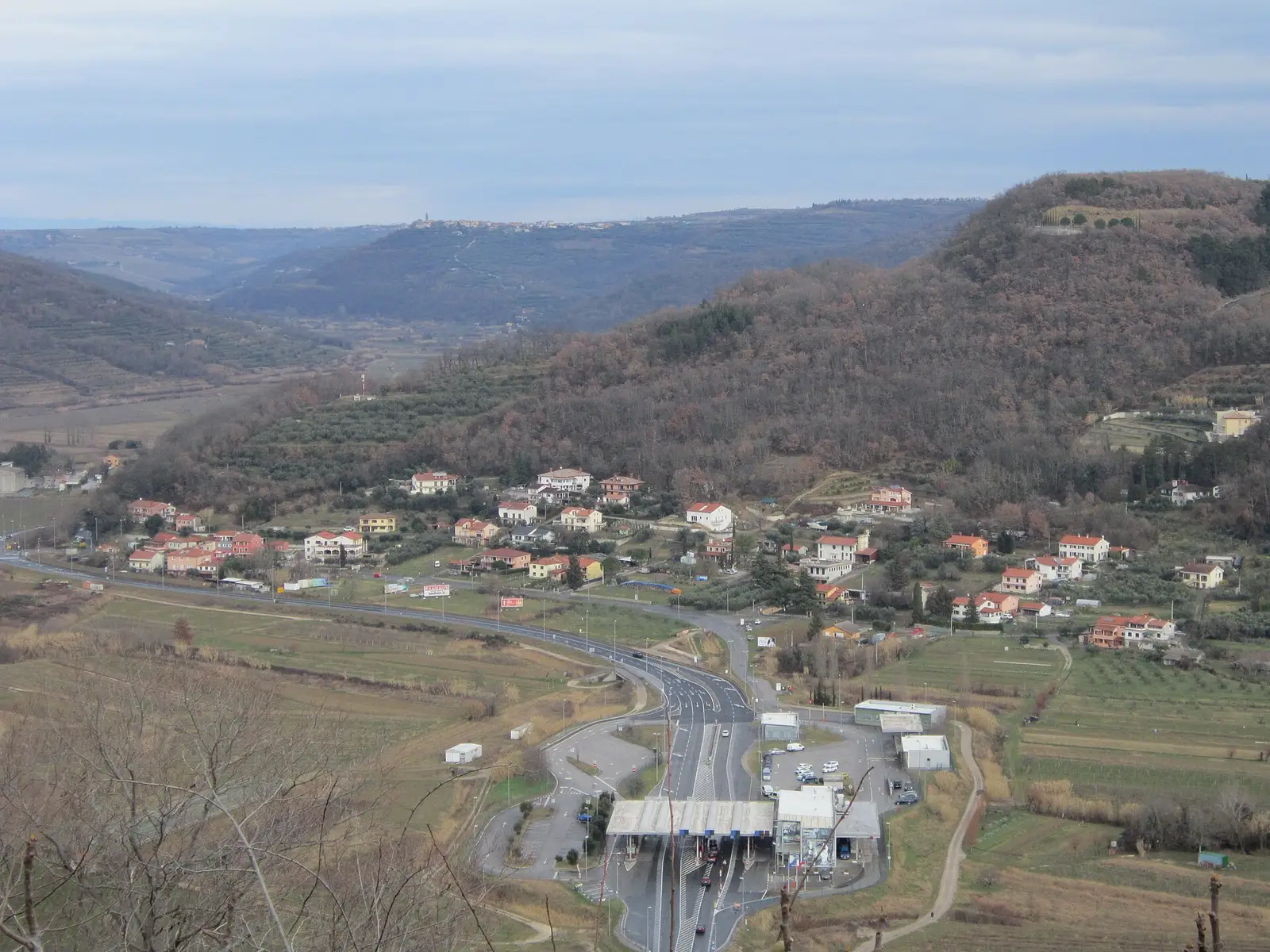
Sopot drops about 30 metres on the Švić stream under an old stone bridge — Istria's second-tallest fall, and the only stop on the loop that asks for a real hike.
The Four Stops Compared
The table lines the peninsula's four waterfall sights up on water type, flow reality, access and cost, using hiking-platform route data and regional board materials, checked on 13 September 2026. Flow reality is the column that should drive your planning.
| Stop | Water feature | Flow reality | Access | Fee logic |
|---|---|---|---|---|
| Sopot | ~30 m fall under a stone bridge | Rain-fed; strongest in spring | Moderate hike, ~7.5 km from Buzet | Free |
| Kotli | Rock-carved mill pools on the Mirna | Pools hold water longer; bathing in season | Short walk from the parking | Free |
| Zarečki krov | Tufa apron under a rock roof | Best after rains; shrinks in dry spells | Short walk near Zarečje | Free |
| Pazinska jama | Stream vanishing into a karst abyss | The underground system is less weather-bound | In-town viewpoint; guided cave descent | Viewpoint free; cave tours priced |
The Four Stops in Detail
Each stop answers a different question about the peninsula's water — the tall fall, the swimmable pools, the tufa formation and the vanishing river.
Istria's streams share one geometry: short catchments on karst, rising fast after rain and falling fast without it. What each stop does with that water differentiates them. Sopot throws its stream off a shelf.
Kotli's river has polished smooth bathing pools under old mill houses. Zarečki krov builds a rock roof out of travertine and slides under it. At Pazin the water leaves the surface world, pouring into a pit below the castle and continuing underground.
Together the four make a cross-section of karst hydrology you can walk in a day — hike, swim and cave tour included.
Sopot: the hike to the second-tallest fall
At roughly 30 metres, Sopot is Istria's second-tallest waterfall, dropping on the Švić stream under an old stone bridge near the village of Strana. It is the loop's only real walk: the standard route from Buzet runs about 7.5 km round trip with moderate climbing, 2-2.5 hours; a variant starts from the Roč side. Go after spring rain and the fall lands with weight; in a dry summer the same rock wears a thinner veil.
Route options on the Sopot page.
- ~30 m drop, second-tallest in Istria, on the Švić stream.
- Moderate hike: ~7.5 km round trip from Buzet, 2-2.5 h.
- Boots or grippy trainers; the path holds mud after rain.
Kotli: the mill pools
Kotli is a ruined mill hamlet on the Mirna's upper course, abandoned mid-century and left to the river: the water has polished smooth basins into the rock beneath the old mill houses, and in season they fill with swimmable green water. The hamlet itself — stone shells of mills, an arched bridge, silence — is half the visit. Access is a short walk from the parking above the village.
Etiquette on the Kotli page.
Zarečki krov: the tufa roof
Near the hamlet of Zarečje, a stream has built a travertine apron out from the valley side until it overhangs like a roof, and the water now slides along the rock's underside before dripping off the edge — a formation that renews itself with every calcium-rich flood. It is the loop's quickest stop: a short walk from the road and a viewing angle from under the overhang. After spring rains the stream runs the full width of the roof; in August it stands quieter.
Mechanics on the Zarečki krov page.
Pazinska jama: the vanishing river
Pazin's abyss is the loop's set piece: below the medieval castle on its hilltop, the Pazinčica pours into a karst pit, disappearing underground toward springs on the west coast. The view from the castle rim is free and takes half an hour; the full product is the guided descent — a traverse and zip-line adventure run by Pazin operators, bookable in season. Jules Verne fixed the site in fiction, and the local legend machinery around it runs deep.
Tour formats on the Pazin abyss page.
- Castle-rim viewpoint: free, always open, 30 min.
- Guided cave adventure: book ahead for July-August; a physical half-day.
- The Pazinčica above the pit dries in summer — the underground system persists.
Sopot height (~30 m, second-tallest in Istria) and the Buzet hike from route platforms and regional board materials; Kotli, Zarečki krov and Pazin from the site pages' own research, checked 13 September 2026.
Flow, Bases and the Day Loop
Two decisions organise an Istria waterfall trip: when the streams will actually run, and which bed to start the loop from.
The peninsula's waterfall calendar is a rainfall calendar. These streams have no snowmelt and no big karst reservoir — they are flashy, rising within hours of a front and shrinking through weeks of sun. Spring (March-May) is the statistical best: regular fronts, cool air, full streams.
Late autumn repeats the pattern. High summer is the gamble: the coast is at its best and the streams at their thinnest, with Kotli's pools and Pazin's underground world degrading most gracefully. The base decision is easier: the stops cluster in the middle and north, so any western or central bed works, and Pazin's expressway junction makes it the hub.
The seasonal-flow problem, honestly
Plan Istria's waterfalls like this: check the recent rain, not the brochure. In spring the circuit runs at full value — Sopot lands, Zarečki krov slides, Kotli fills. In a dry August, Sopot thins to a ribbon and Zarečki krov dries at the edges; the loop still works but quieter, with the abyss and the mill village carrying the day.
Waterfall-first trips belong in the shoulder months; beach weeks take midsummer and the smaller version.
- March-May: the reliable window — full streams, cool hiking, green valleys.
- June-September: coastal prime time, thinnest streams; Kotli and Pazin hold up best.
- After any multi-day front, give the streams a day to clear and go.
Where to base
Three base profiles cover the peninsula. Rovinj: the coast classic, roughly an hour from Pazin — best for a beach-first trip with one waterfall loop. Pula: the south, slightly further from everything but the motorway compensates.
Motovun or the hilltowns: inland, closest to Kotli and the northern loop. Pazin works as a functional base for a night, with every stop within an hour.
- Beach-first trip: Rovinj or Pula, one loop day, spring if possible.
- Waterfall-first trip: Motovun or a Pazin-area bed, two half-loops.
- Book Pazin cave seats ahead in July-August regardless of base.
- Rural roads are narrow but signed — the loop drives slower than the map suggests.
The day loop that works
The standard loop runs front-loaded: out early to Buzet, the Sopot trail while the air is cool (2-2.5 h), lunch at Kotli with a swim if the pools are on, the short stop at Zarečki krov on the way south, and Pazin last — castle rim, cave tour if booked. Total driving lands around 2.5-3 h from a western base. The hike-first shape puts the walk in the cool hours.
Drivers continuing east can hand the day into the road trip circuit.
Flow seasonality and drive-time logic from regional board materials and route platforms, phrased conservatively around rainfall dependence, checked 13 September 2026.
The Tours That Cover the Inland
Two bookable products serve the peninsula's interior: the guided food-and-towns tour through Inner Istria, and the Pazin adrenaline-and-culture product that includes the cave traverse under the abyss.
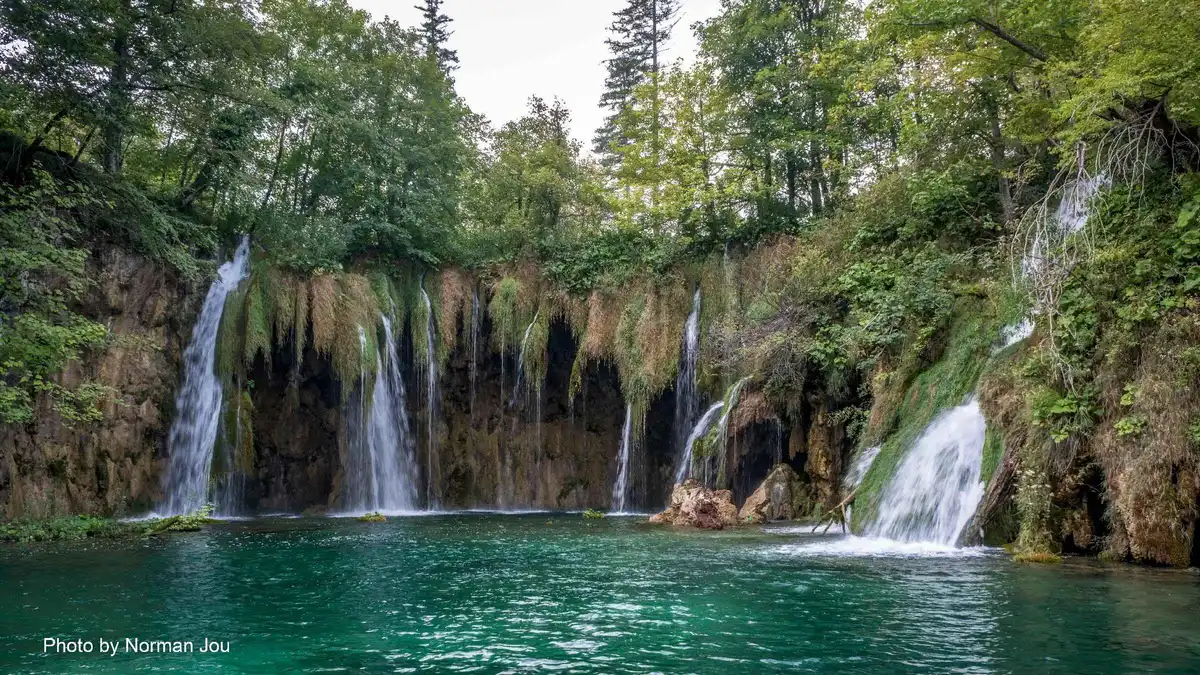 from $106.74
Istria: Guided Tour of Inner Istria with Food Tasting
Inner-Istria day tour through the hill towns with a Pazin stop and local food tasting.
Check AvailabilityPrices, ratings and details are the platform's own, checked in Q3 2026; dollar figures are the listed prices — the platform bills in your account's currency.
Istria Questions, Answered
Is Istria good for waterfall trips?
Good with the right expectations: the peninsula offers small, seasonal, characterful water — a 30-metre fall, mill pools, a tufa roof, a karst abyss — rather than the Dinaric giants. Treat it as a day loop from a beach base.
When do the streams actually flow?
They are rain-fed karst streams: best in spring and after autumn rains, thinnest in late summer. The reliable plan is chasing recent rain rather than the calendar.
How do you reach the tall fall near Buzet?
On foot: about 7.5 km round trip from Buzet with moderate climbing, 2-2.5 hours, with a variant from the Roč side. The trail breakdown is on the Sopot page.
Can you swim at Kotli?
Yes, in the rock-carved pools below the ruined mills, when the Mirna's upper course is running — typically through early and mid-summer. Etiquette on the Kotli page.
What is the Pazin abyss?
A karst pit below Pazin's castle where the Pazinčica disappears underground — Jules Verne's scene, run today as a guided cave traverse and zip-line adventure. Booking on the Pazin abyss page.
Are there tours?
Two bookable products serve the interior: the Inner-Istria food-and-towns day, and the Pazin adrenaline-and-culture product with the cave traverse — both on the tour card above. The four outdoor stops are free and self-drive.
Where the Peninsula Connects
The pages this one leans on — the four stops, the road circuit and the country context:
Sopot waterfall
The 30 m fall under the stone bridge, with the Buzet hike route.
Kotli
The ruined mill hamlet and its swimmable rock pools on the Mirna.
Zarečki krov
The tufa roof the stream slides under — the loop's quickest stop.
Pazinska jama
The abyss under the castle, Verne's scene and the cave-adventure booking.
The waterfalls road trip
Where the peninsula slots into the country-wide driving week.
Reviewed Q3 2026 (July–September 2026); next review Q4 2026. Prices, hours and terms are set by the venue or operator and confirmed at checkout.
We may earn a commission if you book through one of our links, at no extra cost to you. Full affiliate disclosure