 Croatia Waterfalls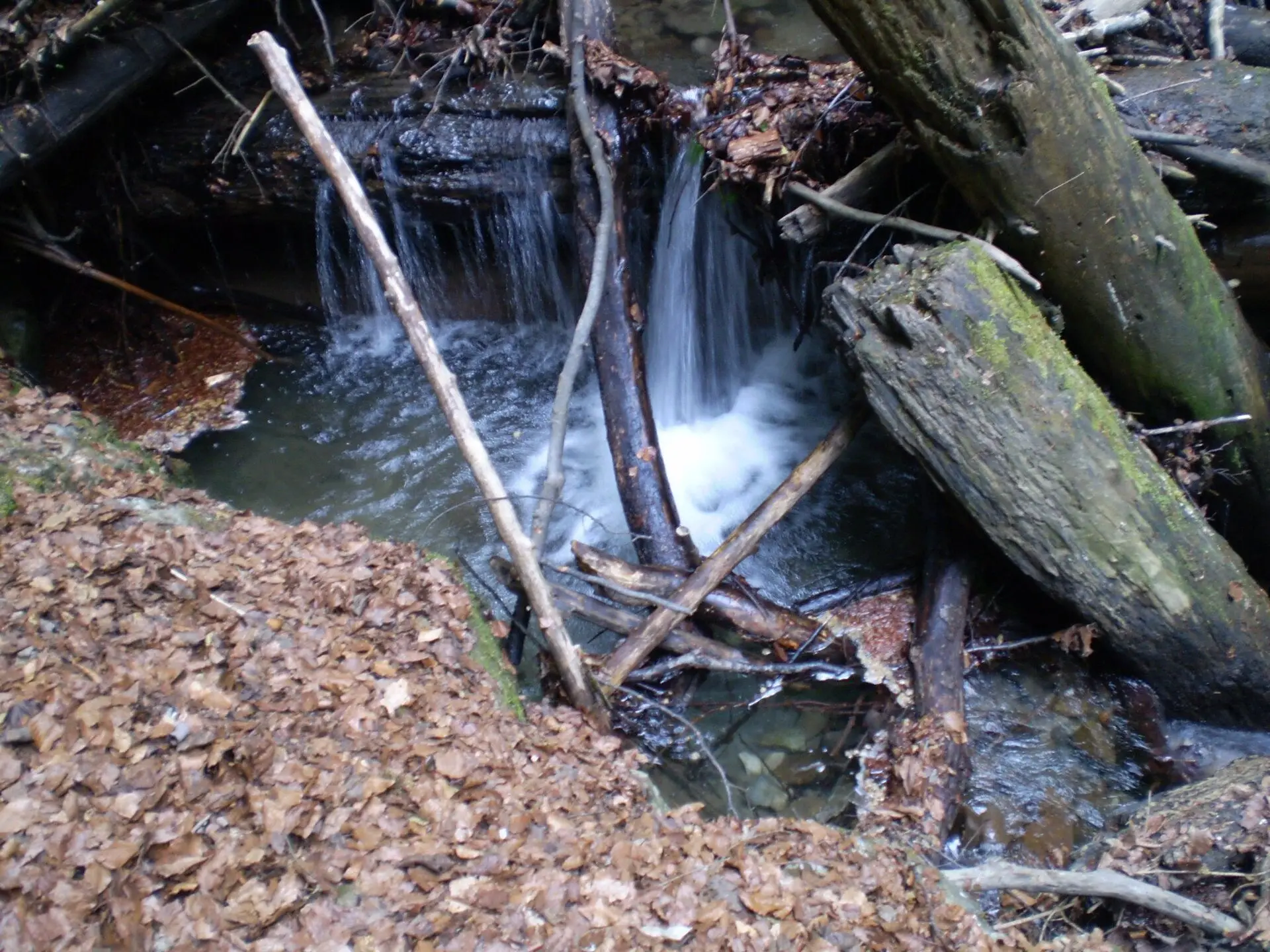
The vrazji prolaz — the Devil's Passage — is Gorski Kotar's most theatrical walk: a limestone slot some 800 metres long with sections barely two metres wide, threaded by the Jasle stream and crossed on a fenced wooden walkway bolted to the rock. It sits in the Zeleni vir excursion area near Skrad and Fužine, in the wooded hills between that town's two lakes, Bajer and Lepenica, and it packs four features into one short circuit: a karst spring resting in a shallow cave below a 70-metre rock face, a waterfall dropping past the cave mouth, the fenced canyon itself, and a 200-metre cave at its end. The area has been protected since 1962 as a geomorphological reserve. This page covers the circuit in walking order, the 2026 fee and hours, the helmet rule, and the 2026 road closure that forces a foot approach. The regional frame sits on the Gorski Kotar waterfalls page, and the country-wide directory starts on the Croatia Waterfalls homepage.
Quick answer The 2026 fee, the helmet rule, the circuit in walking order and the road closure in one read
Checked on 13 September 2026: Vražji prolaz is visited through the Zeleni vir excursion site, which charges €7 per adult in 2026 (children under 7 free), sold at the entrance with no dated slots. The summer schedule runs daily 10:00-18:00 from mid-June; the site shuts for winter. The circuit is 1.5-2.5 hours: the Zeleni vir spring below a 70 m rock face, a waterfall in front of the cave mouth, the 800 m fenced canyon of the Jasle stream — helmets obligatory, loaned on site — and the ~200 m Muževa hiša cave 14 m above the stream. In 2026 the access road is closed to vehicles for reconstruction; the operator sends visitors on foot via the marked circular trail from Skrad railway station. Season mechanics on the best time to visit page; family logistics on croatia waterfalls with kids.
Key takeaways
- €7 adult in 2026, under-7s free, tickets at the gate — no booking system.
- The canyon walk requires a helmet; they are provided at the site.
- Four features in one circuit: spring, waterfall, fenced canyon, cave.
- Closed in winter; summer hours 10:00-18:00 daily from 15 June.
- Access road closed for reconstruction in 2026 — arrive on foot from Skrad station.
Key facts
Opening hours
| Summer season (daily from 15 June) | 10:00–18:00 |
|---|---|
| Spring shoulder (April-May, weekends) | 10:00–17:00 |
| Winter (late autumn to spring) | Closed–Closed |
Closed Shut through the winter; spring weekday openings are by prior arrangement for announced groups — checked on the operator site 2026-09-13
Admission
- Adult
- €7 in 2026, bought at the site entrance — operator price list, checked 2026-09-13
- Reduced
- Group and school visits by prior arrangement with the operator (PIN Skrad); helmets for the canyon are loaned on site
- Free
- Children up to 7 years
Planning it
- Time needed
- 1.5-2.5 h for the spring, waterfall, canyon and cave circuit
- Address
- Zeleni vir i Vražji prolaz, near Skrad and Fužine, Gorski Kotar, Primorje-Gorski Kotar County, Croatia
Vražji Prolaz Tickets: the 2026 Fee and the Real Options
The fee figures below come from the operator's own price list, checked 13 September 2026, and the tour figure prints from the booking platform. There is no separate ticket for the canyon — one entrance ticket covers the spring, the walkway, the cave and the reserve.
One ticket buys the whole circuit; the only real decisions are the season and the approach on foot:
| Option | Season / window | Adult price | What it covers | Where it books | Book |
|---|---|---|---|---|---|
| Entrance ticket to the Zeleni vir excursion siteEvery individual visitor | Summer season daily 10:00-18:00; spring weekends 10:00-17:00 | €7 (2026); children up to 7 free | Spring, waterfall, the fenced canyon with helmet loan, the cave | At the site entrance | Official site |
| Operator notices and contacts (PIN Skrad)Groups, schools and hikers planning around the road closure | Published through the season | Group terms by prior arrangement | Weekday openings for announced groups; road-closure updates | Operator site and phone | Official site |
| Plitvice Lakes day tour from Rijeka (simply guided)Rijeka- and coast-based visitors who want a waterfall day without a car | Scheduled departures in season | From ~$104 on the card | Transport and guided Plitvice entry — it does not stop at Vražji prolaz, but it is the nearest bookable waterfall product on the Gorski Kotar side | Tour card | Check Availability |
| Driving up the access roadAnyone planning to drive to the gate | 2026 — closed to all vehicles for reconstruction | A locked road, not a fee | Approach on foot via the marked circular trail from Skrad railway station, or from Donji Ložac | Skip the drive — walk in | Check Availability |
| The canyon without a helmetAnyone hoping to enter the canyon bareheaded | Obligatory at all times on the walkway | Turned back at the entrance | Helmets are loaned on site at no charge — bring your own to skip the wait | Skip it — wear the helmet | Check Availability |
What the Devil's Passage Is
Two numbers define the canyon — 800 metres of length and two metres of width at its tightest — and one date explains its protection.
Vražji prolaz is a slot canyon cut by the Jasle stream into the limestone of the Gorski Kotar plateau, the high, forested belt between the coast and the Pannonian plain. The water carved a corridor roughly 800 metres long whose walls close to about two metres in the narrow sections — dark, dripping rock where the stream runs beneath the walkway and ferns hang from the seepage lines. A fenced timber walkway on frames and stairs carries visitors the full length of the slot; the fence is the reason the site works for families, and the helmet rule is the reason it works at all, since small rockfall from the canyon walls is a standing hazard.
The canyon is only one piece of a reserved landscape: in 1962 the area was proclaimed a special geomorphological reserve covering 200 hectares, and the Zeleni vir excursion site at its heart has been a Gorski Kotar outing since the 1920s, when the little Munjara hydroelectric plant was built at the spring in 1921 — it still turns on its original machinery, and in its day it supplied the whole region with electricity.
Canyon dimensions, reserve status (1962, 200 ha) and the Munjara plant follow the operator site and regional references, checked 13 September 2026.
The Circuit: Spring, Fall, Canyon and Cave
The site is a single loop; the order below is the walking order, and each stop earns its own twenty minutes.
The loop begins at the excursion site by the Zeleni vir spring, a pool of opaque emerald water resting in the bottom of a shallow cave at the foot of a rock face about 70 metres high. Two streams pour from the top of that wall; one falls as a free waterfall in front of the cave mouth — the fall local and tourist-board sources call Skakavac — so you watch it through a curtain of water, and the cave behind the fall holds its own green lake. Below, the water turns the 1921 Munjara turbine.
From the spring the trail climbs into the canyon itself. The fenced walkway crosses and re-crosses the Jasle on footbridges, squeezes through the two-metre narrows and climbs dry-slate stairs for the full 800 metres; the air inside is canyon-cold even in August, which is precisely why Fužine and the coast use the site as a cool-air escape at the peak of summer. At the canyon's end the route rises 14 metres above the stream to the entrance of Muževa hiša, a cave about 200 metres long that ends in a chamber with a small lake — strictly protected horseshoe bats roost inside, so the rule is quiet passage and no lights on the roosts. The return leg follows the geological and botanical educational trails back to the site.
- Zeleni vir spring: emerald pool in a shallow cave below the 70 m wall.
- The waterfall in front of the cave mouth — photographed through the falling water.
- The fenced canyon: 800 m on walkways and stairs, helmets obligatory.
- Muževa hiša cave: ~200 m, a lake at its end, protected horseshoe bats.
- Munjara, the 1921 hydro plant still running its original machines.
The circuit stop by stop
Timings below assume a family pace with photo stops; fast walkers do the loop in half the time.
| Stop | What it is | Typical time |
|---|---|---|
| Zeleni vir spring and waterfall | Emerald karst spring in a cave behind a falling curtain of water | 20-30 min |
| Munjara hydro plant | The 1921 plant on its original machinery, visible from the trail | 5-10 min |
| Vražji prolaz canyon | 800 m fenced walkway over the Jasle stream, helmet required | 30-45 min |
| Muževa hiša cave | 200 m cave 14 m above the stream, lake chamber at the end | 20-30 min |
| Educational trails (return) | Marked geological and botanical loops back to the site | 20-40 min |
Circuit structure, cave dimensions (14 m above the Jasle, ~200 m long) and the bat-protection rule follow the operator's site text, checked 13 September 2026.
Reaching the Site in 2026: the Approaches Compared
The access road to the site is closed to all vehicles for reconstruction in 2026 — the status and both foot approaches below come from the operator's own access notice, checked 13 September 2026.
| Approach | Time on foot | What it involves | Status in 2026 |
|---|---|---|---|
| Circular trail from Skrad railway station | Roughly an hour, moderate | The operator's recommended route: a marked circular trail from the station at Skrad through the forest to the site | Open — the official alternative while the road is closed |
| Path from Donji Ložac (near Brod na Kupi) | Allow half a day's walking | A longer approach from the Kupa valley side, for hikers combining the reserve with the southern trails | Open — signed as the second foot access |
| The access road by car | Not applicable | The direct drive to the site from the Skrad side | Closed to all vehicles for reconstruction — check the operator site for reopening |
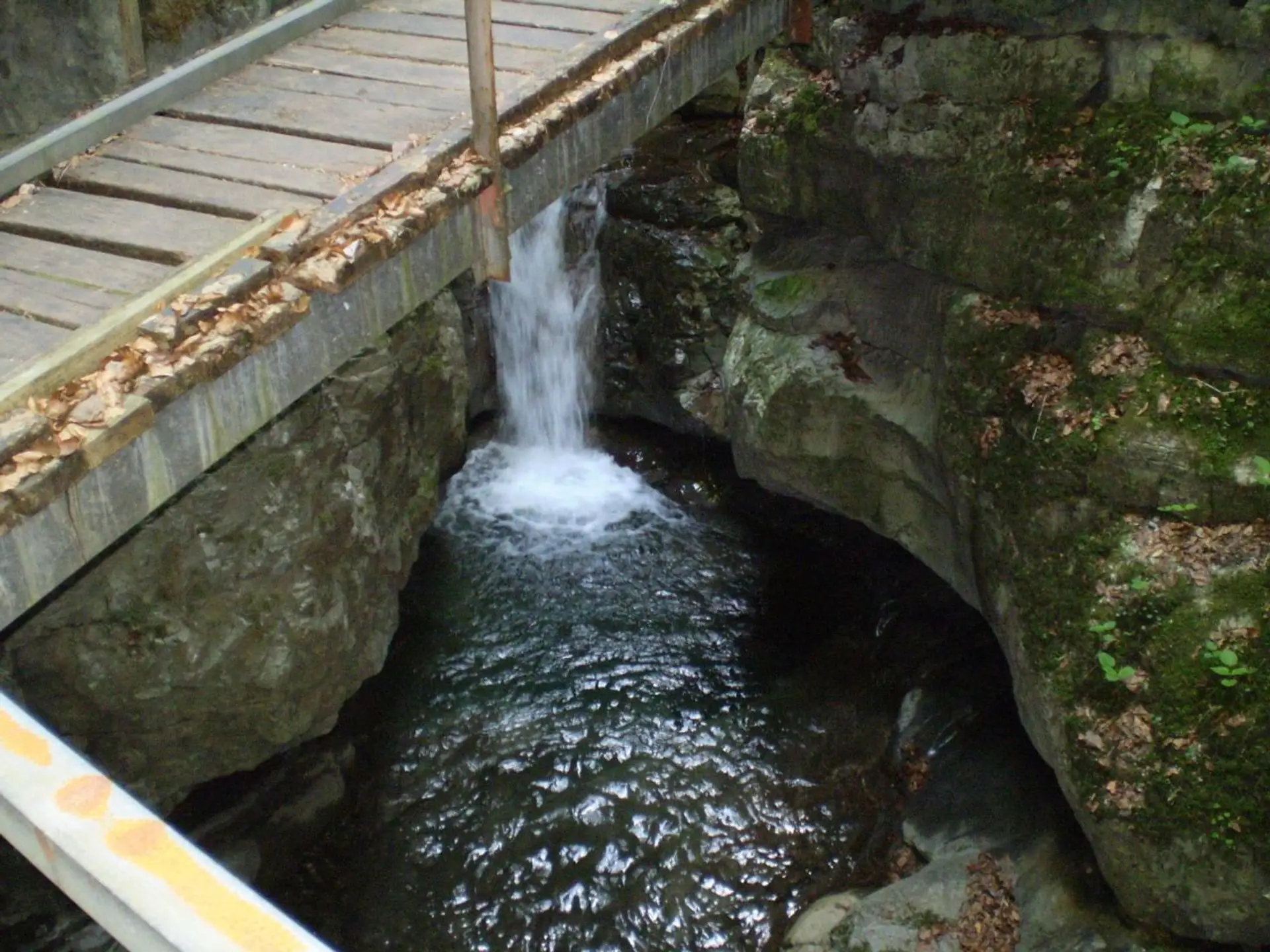
The fenced walkway is what makes the Devil's Passage walkable: 800 metres of stairs and footbridges pinned to the canyon walls above the Jasle stream, passed in a helmet at the site's coldest air temperature.
Vražji Prolaz Map: the Canyon, the Spring and the Trailheads
The reserve between Skrad and Fužine: the circuit stops, the foot trailhead at the railway station and the two lakes that bracket the site.
Tours Near Gorski Kotar: the Honest Picture
No day tour visits the Zeleni vir reserve — the canyon is a self-drive or rail-plus-walk destination. The nearest bookable waterfall day product from the Gorski Kotar side is the Plitvice trip from Rijeka:
 from $104.42
Plitvice Lakes Day Tour From Rijeka Simply Guided Tour
Simply-guided Plitvice day tour from Rijeka with the park's boat and train rides.
Check AvailabilityPrices, ratings and details are the platform's own, checked in Q3 2026; dollar figures are the listed prices — the platform bills in your account's currency.
Vražji Prolaz: Questions, Answered
How much does the canyon cost in 2026?
€7 per adult, with children up to 7 free, per the operator's 2026 price list checked 13 September 2026. Tickets are sold at the site entrance — there is no online booking system, and the helmet loan is included.
Why are helmets obligatory, and are they provided?
The walkway runs beneath walls that shed small rock, so the operator requires a helmet for the entire canyon section and loans them at the site. Bringing your own (a climbing or cycling helmet is fine) saves the wait on busy August mornings.
Is the waterfall behind the cave really called Skakavac?
Tourist-board and regional sources use the name Skakavac for the fall that drops in front of the Zeleni vir spring cave; the operator's own text describes the fall without naming it. Both point to the same feature: the stream tumbling from the top of the 70 m wall before the cave mouth.
Can you swim at the spring or in the canyon?
No — this is a walking reserve, not a swimming hole. The Jasle and the spring run at mountain-karst temperatures even in August, the cave is a protected bat roost, and the site's own rules keep visitors on the walkway. For a legal summer swim, the rivers you can swim in list starts an hour's drive away.
Is it suitable for children?
Yes, with supervision — the fenced walkway and the helmet rule exist precisely for the narrows, and the circuit takes 1.5-2.5 hours at a family pace. The stairs are steep and often wet, so the practical minimum is a sure-footed school-age child. More age-banded advice sits on the kids page.
How do I get there without a car in 2026?
By train on the Zagreb-Rijeka line to Skrad station, then the operator's recommended circular trail on foot — roughly an hour of moderate walking. The site's access road is closed to vehicles for reconstruction in 2026, so the walking approach is currently the standard one.
When is the best time to visit?
Midsummer, oddly enough, is when the canyon earns its keep — the walkway sits in canyon-cold air while the coast swelters, and Fužine markets it as an August cool-air escape. Spring gives the fullest waterfall, winter closes the site entirely. Month-by-month detail is on the best time to visit page.
Where to Go From the Canyon
The pages this one leans on — the region around it, the family logistics and the wider trip planning:
Gorski Kotar waterfalls
The whole green belt between Zagreb and Rijeka: Kupica pools, the Zeleni vir reserve and the plateau's other stops.
Waterfalls near Zagreb
The capital's day-trip radius, with the Gorski Kotar highway corridor as its southern arm.
Croatia waterfalls with kids
Which falls and walkways suit which ages, helmets and fences included.
Best time to visit
Season, flow and crowd mechanics for every region, month by month.
Waterfall regions
The country sorted into its waterfall regions, Gorski Kotar among them.
Reviewed Q3 2026 (July–September 2026); next review Q4 2026. Prices, hours and terms are set by the venue or operator and confirmed at checkout.
We may earn a commission if you book through one of our links, at no extra cost to you. Full affiliate disclosure